- +1 (604) 351-2516
- info@hummingbirdcopacking.com
- 11-3771 North Fraser Way Burnaby, BC


Maybe you have been selling at farmers markets, filling online orders from your kitchen, or supplying a handful of local retailers. Demand keeps climbing, and at some point the math stops working: your current space, your equipment, and your time simply cannot keep up. That is where finding a co-packer in Canada becomes the next step.
Choosing the right co-packing partner can feel overwhelming. There are hundreds of contract food manufacturers across the country, and choosing the wrong one can cost you months of lost time, wasted product, and strained relationships with your retail buyers. This guide breaks down exactly what to look for, what questions to ask, and how to evaluate a co-packer before you commit.
Co-packing (short for contract packing or contract manufacturing) is when a food production facility manufactures and packages your product on your behalf. You own the recipe, the brand, and the customer relationships. The co-packer handles production, packaging, and often labeling and warehousing.

Sauce production at Hummingbird Foods
Most food brands reach out to a co-packer in Canada when they hit one of these inflection points:
If any of these sound familiar, it is time to start researching co-packing companies. Not sure about the basics? Our frequently asked questions page covers the fundamentals of working with a co-packer.
This should be your first filter. At a minimum, your co-packer should hold a recognized food safety certification. The most common in Canada are:
Ask to see current certificates. A reputable co-packer will share these without hesitation.
Make sure the facility can actually produce your product. This sounds obvious, but many emerging brands waste weeks in conversations with co-packers who do not have the right equipment for their product type. Key questions:
Take a look at our services page for an example of the capabilities a full-service co-packer should be able to articulate clearly.
While co-packing facilities are located across Canada, the right partner can serve you regardless of geography. Many co-packers have established shipping networks that reach every province and into the US efficiently. What matters more than proximity is whether your co-packer has reliable logistics partnerships, experience with interprovincial food regulations, and the ability to handle your shipping requirements, whether that is LTL freight, full truckloads, or direct-to-consumer fulfillment.
When evaluating a co-packer’s logistics, ask about their carrier relationships, typical transit times to your key markets, and whether they can help navigate interprovincial labeling requirements.
MOQs are one of the biggest barriers for emerging food brands. Large contract food manufacturers often require minimum runs of 5,000 to 50,000 units, which is out of reach for a brand that is still proving product-market fit.
Look for a co-packer that offers flexible MOQs and is willing to grow with you. Starting with a smaller initial run gives you the ability to test retail placement, gather consumer feedback, and iterate on your product before committing to a massive production order.
Once you have a shortlist, schedule calls. Come prepared with these questions:
Pay attention to how they answer as much as what they say. A good co-packer will be transparent, ask you detailed questions about your product in return, and set clear expectations. Read what our clients say about working with us.
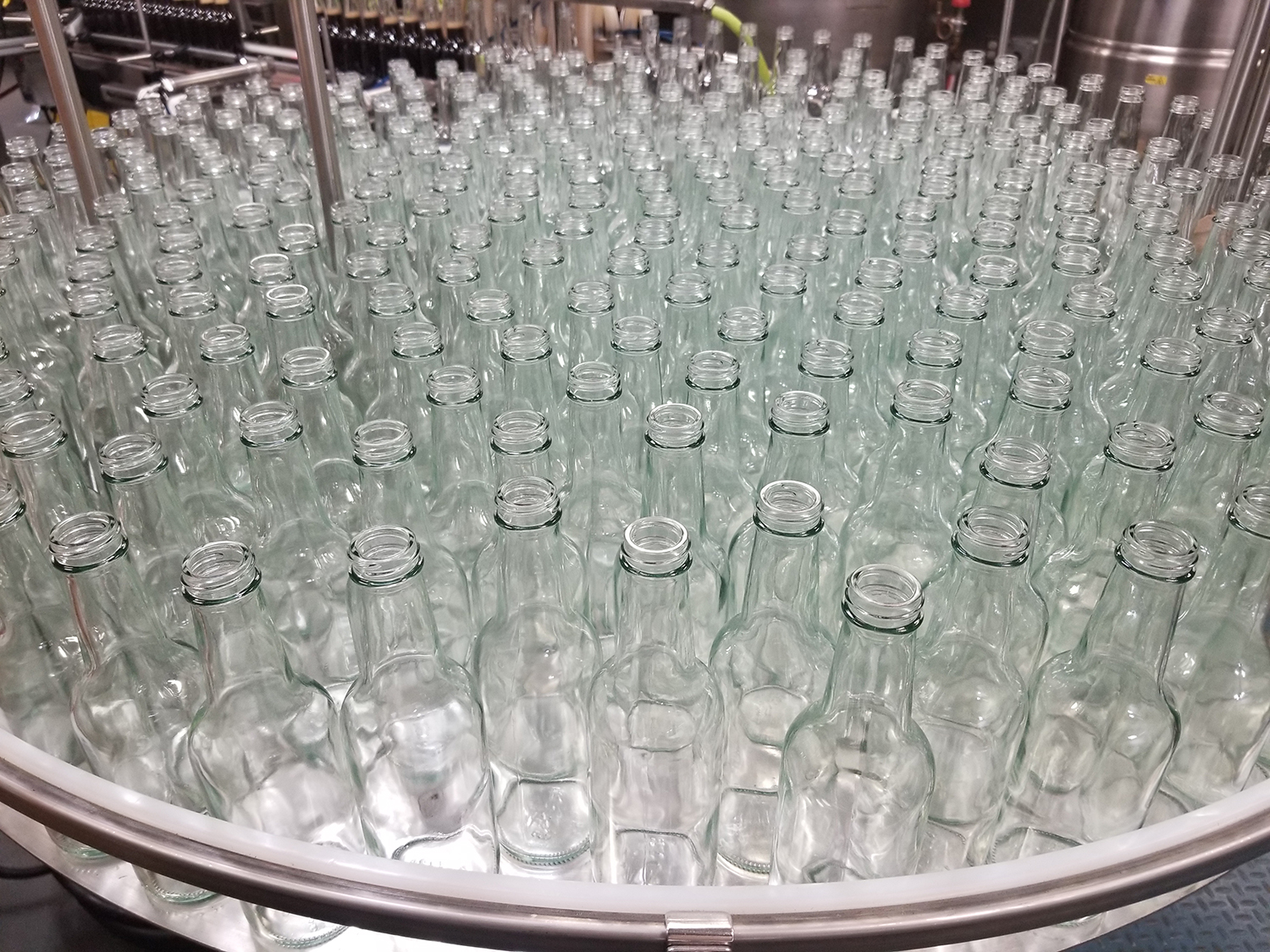
Assembly bottle table at Hummingbird Foods
Pricing transparency is rare in the co-packing industry, which makes it difficult for brands to budget accurately. Here is a general breakdown of what to expect:
| Cost Component | Typical Range | Notes |
|---|---|---|
| Setup & Trial Fees | $500 – $5,000 | Recipe testing, line calibration, trial batch |
| Per-Unit (500 units) | $3.00 – $8.00 | Higher per-unit at low volume |
| Per-Unit (10,000 units) | $0.50 – $2.00 | Significant savings at scale |
| Ingredient & Packaging | Varies | Supply your own or co-packer sources (may include markup) |
| Storage | $25 – $75/pallet/month | Some co-packers include short-term storage |
| Fulfillment | Per-shipment fees | If co-packer ships to retailers/distributors |
Vancouver and surrounding cities have a strong concentration of co-packers, particularly for sauces, beverages, health foods, and plant-based products. Port access for importing specialty ingredients and exporting. Hummingbird Foods, based in Burnaby, serves brands across Canada and the US from their SQF-certified facility.
Competitive production costs, strong agricultural supply chains, and central logistics positioning. Winnipeg has emerged as a hub with cost-effective facilities and excellent rail and trucking access to both coasts.
Canada has co-packing capacity in every major region, from British Columbia to Ontario to the Atlantic provinces. Rather than defaulting to the nearest facility, focus on finding a partner whose capabilities, certifications, and production capacity match your product. A co-packer with strong logistics networks can ship nationally just as efficiently regardless of where they are based.
Be cautious if you encounter any of the following during your search:
The terms are often used interchangeably in Canada. Technically, co-packing refers specifically to packaging an existing product, while contract manufacturing covers the full process from production through packaging. In practice, most co-packers in Canada offer both services.
Costs vary depending on your product, batch size, packaging format, and ingredient complexity. As a rough guide, setup and trial fees typically range from $500 to $5,000, and per-unit production costs can range from $0.50 to $8.00 depending on volume. The best way to get an accurate quote is to reach out with your product details and target volumes.
MOQs vary widely. Large co-packers may require 5,000 to 50,000 units per run. Smaller, flexible co-packers like Hummingbird may work with runs as low as a few hundred units, though per-unit costs will be higher at lower volumes.
Not necessarily. Many co-packers offer recipe development and formulation services. If you have a home recipe that you love, a co-packer can help you scale it for commercial production while maintaining the flavour and quality you want.
Industry timelines from first conversation to first production run typically run 8 to 16 weeks. At Hummingbird, it is usually 4 to 8 weeks. This includes quoting, recipe testing, trial batches, packaging sourcing, and scheduling your production slot. Complex products or custom packaging can extend this timeline.
At a minimum, look for HACCP certification. For access to major grocery retailers, SQF or BRC certification is increasingly required. If you are producing organic, gluten-free, kosher, or halal products, confirm that the facility holds the relevant certifications from recognized bodies.
Many co-packers offer label review and can help ensure your nutrition facts panel, ingredient list, and allergen declarations meet CFIA requirements. However, ultimate regulatory compliance responsibility rests with you as the brand owner, so consider consulting a food regulatory specialist for complex products.
Co-packing means a facility produces your existing recipe under your brand. Private label means a manufacturer develops a custom product to your specifications. White label means you purchase a pre-existing product and put your own brand on it. Many co-packers, including Hummingbird, offer all three services. Read our full comparison of private label vs white label vs co-packing.
At Hummingbird Foods and Copacking, we work with emerging and established food brands across Canada. We specialize in small-batch co-packing, private label manufacturing, and white label production, with SQF certification and the flexibility to scale with you as your brand grows.
Not sure whether you need co-packing, private label, or white label? Read our guide to private label vs white label vs co-packing.
Get in touch with our team to discuss your product and get a quote. We work with food brands at every stage.
Get a Quote